Chentar, ceramic artist in Paris
Slow Potter Studio
Meeting the artisan behind Slow Potter


Slow Potter Studio
Meeting the artisan behind Slow Potter

Born in Thailand, Chentar grew up in a culture where craftsmanship holds a central place. It was in Chiang Mai, a city renowned for its traditions, that he first placed his hands on a pottery wheel. The gesture imposed itself on him as something obvious.
Arriving in Paris, he formalized his practice by obtaining a CAP in ceramic wheel throwing — a demanding training rooted in the French tradition of fine craftsmanship.
For nearly ten years, Chentar has been exploring in his Paris studio wheel throwing, hand-building, and the creation of artisanal glazes made from raw minerals and oxides. He selects his clays for their grain, the way they react to fire, and the surface they reveal after firing.
His style, at the intersection of Asian minimalist aesthetics and Western sensibility, gives rise to unique pieces or small series. The clay, partially glazed, remains exposed — revealing its full materiality, its texture, its own character.
Chentar did not initially plan to teach. It was following requests from early visitors — drawn to the wheels, yet intimidated by the clay — that he expanded his practice, finding in teaching an unexpected source of satisfaction.
With Slow Potter, he offers classes and workshops conceived as intimate and deep creative experiences — an invitation to slow down, to touch the material, and to rediscover the patience that only working with clay can offer.
At 27 rue Titon, in the historic heart of Parisian craftsmanship, a bright and almost bucolic ceramics studio open to potters and the curious.
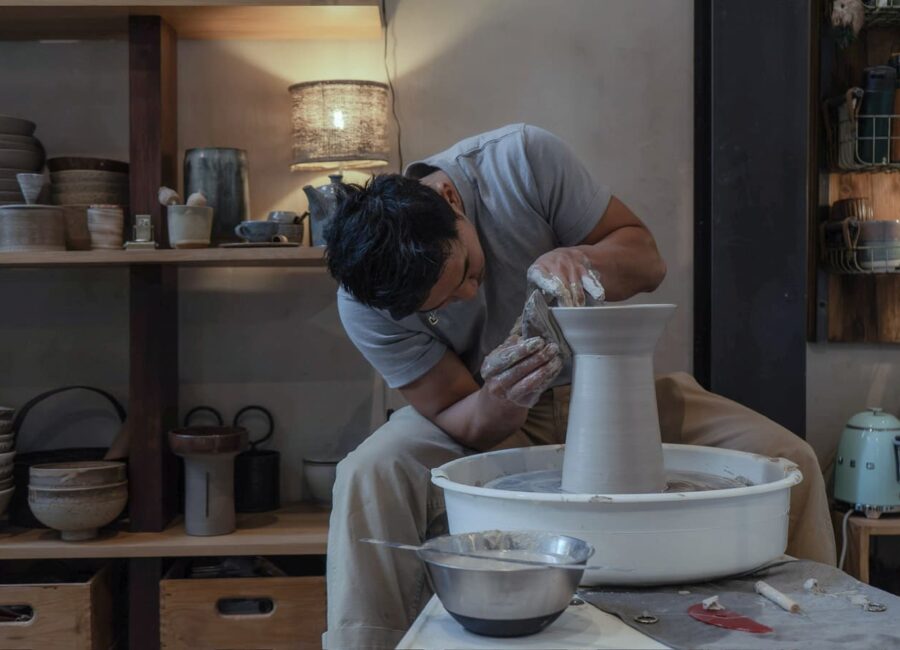
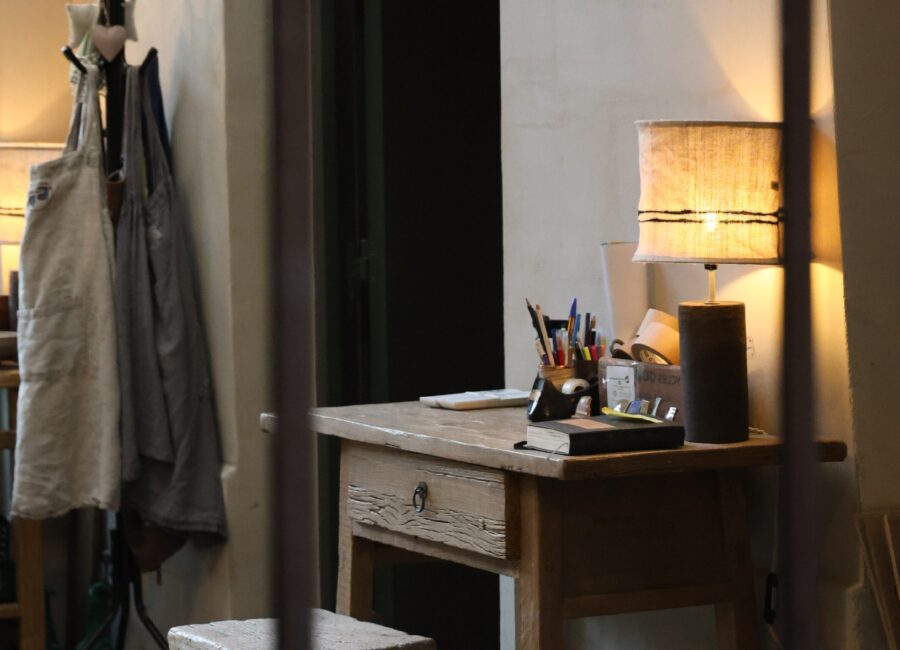
The Slow Potter studio is located at 27 rue Titon, in the Faidherbe village and just steps from the Faubourg Saint-Antoine — the area of Paris where craftsmanship has flourished the most since the 15th century.
Rue Titon is steeped in history: it once housed the Royal Wallpaper Manufacture from which the first hot air balloon took off, and a few years later, the first workers’ movements of the French Revolution.
Built at the back of a courtyard, next to a former carpentry workshop and a beautifully renovated industrial building, the studio has been carefully designed. Extremely bright and almost bucolic, it is an ideal place to create, work and exchange between potters and ceramics enthusiasts.

